Article: The Scholar’s Table: Why Tea Was Never Just About Tea
The Scholar’s Table: Why Tea Was Never Just About Tea
When people think of Chinese tea, they often think of leaves, water, and a teapot.
Yet for more than a thousand years, tea has represented something much deeper. It has been a way of cultivating the mind, appreciating beauty, and creating moments of quiet reflection. In traditional Chinese culture, tea was never merely a beverage—it was a way of living.
A Table That Held More Than Tea
In ancient China, the scholar’s table was the heart of intellectual life.
It was where books were opened, paintings were created, incense was lit, and conversations unfolded. A teapot was always present—not simply to serve tea, but to accompany thought.
Tea slowed time.
It invited patience.
It encouraged silence between words.
For scholars, artists, monks, and poets, preparing tea became part of the creative process itself.
The Vessel Shapes the Experience
Chinese philosophy has long believed that objects influence the state of mind.
A well-made vessel is not decoration. It creates an atmosphere.
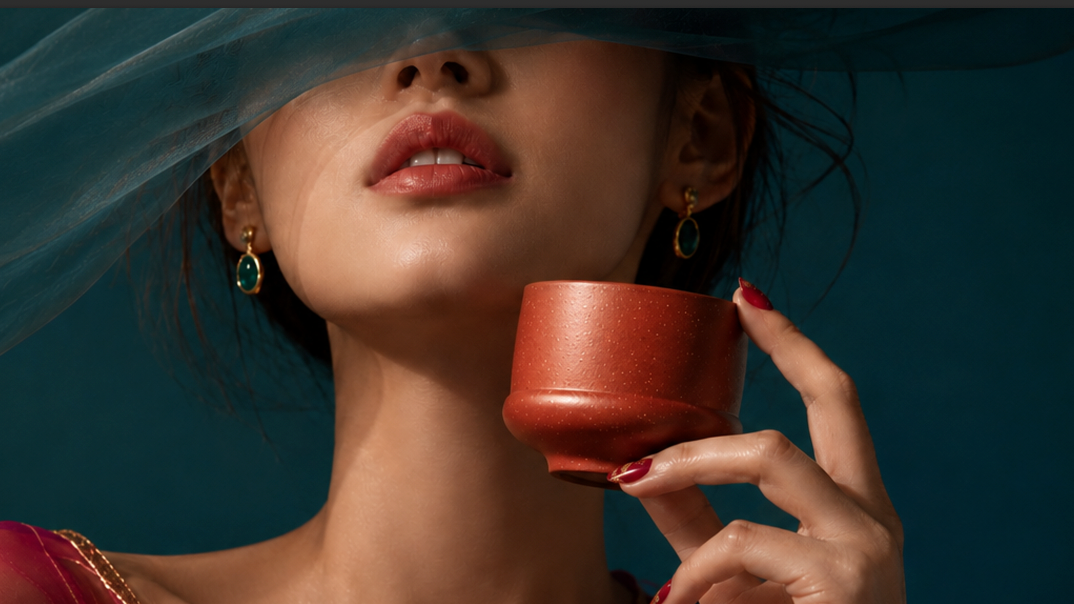
The weight of clay in the hand, the warmth that gradually spreads through the body of a teapot, and the gentle sound of tea being poured all become part of the experience.
This is why Yixing zisha has been treasured for centuries.
Its beauty does not demand attention.
Instead, it quietly reveals itself through use.
The more it accompanies daily life, the richer its character becomes.
The Spirit of Simplicity
The greatest objects in Chinese culture are rarely the most elaborate.
Inspired by Zen philosophy and the wisdom of the Dao De Jing, simplicity is understood not as the absence of beauty, but as the highest expression of it.
A teapot made with restraint allows space for tea.
A quiet room allows space for thought.
A peaceful moment allows space for oneself.
Living With Time
Unlike many modern products that are designed to remain unchanged, zisha evolves.
Tea nourishes the clay.
Hands polish its surface.
Years leave their own gentle marks.
The vessel becomes a reflection of the person who uses it.
Its value grows not because it is preserved, but because it is lived with.
A Contemporary Scholar’s Table
At Jinsha Shanfang, we believe the scholar’s table still belongs in modern life.
It may now sit beside a laptop instead of bamboo scrolls.
Its owner may be an entrepreneur, an artist, or someone simply seeking a quieter rhythm.
Yet its purpose remains unchanged.
To create a place where culture, craftsmanship, and daily life meet.
Because a vessel is never only for holding tea.
It is for holding time.